Han Kuang Exercise Includes Internet-Cut Scenario for First Time, But Southern Taiwan Exempted for “Stock Market”
The Storm Media Commentary, July 22, 2026
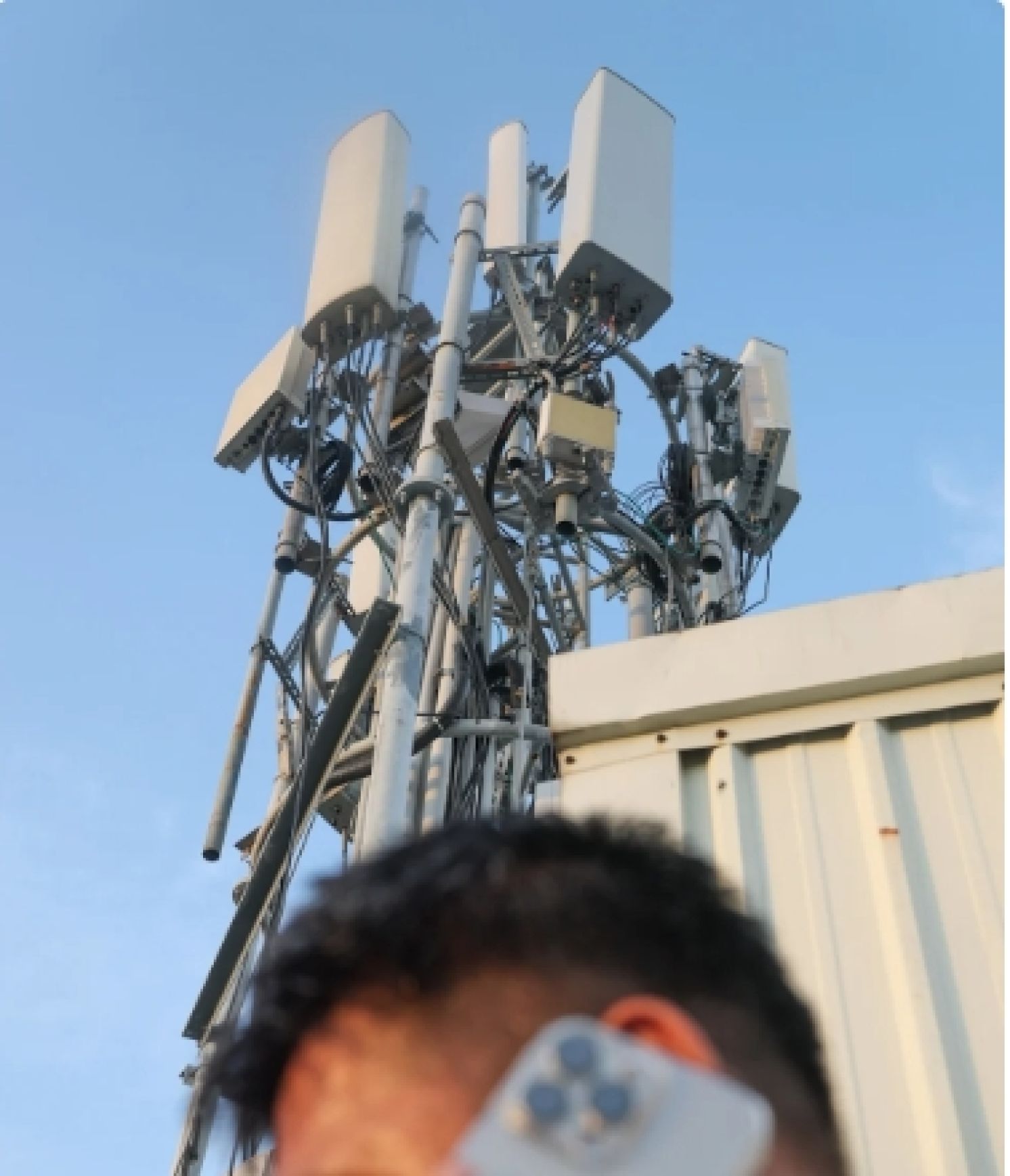
For the first time, the Han Kuang military exercise this year will include an Internet disruption drill. Mobile network speeds will be reduced in northern and central Taiwan, yet southern Taiwan will be exempted from the exercise. The National Communications Commission (NCC) explained that the southern drill is scheduled in the morning, coinciding with stock market trading hours, and authorities were concerned about disrupting investors.
In a wartime scenario, there would be no advance notice, nor would anyone choose a convenient 30-minute window for the public. An enemy would not postpone a cyberattack because the stock market had opened, and cellular base stations would not wait until the market closed before failing. The geographic design of this exercise inevitably raises the question of whether its planners had Taiwan's strategic defense map in mind—or the electoral map for the 2026 local elections.
For years, the Democratic Progressive Party (DPP) administration has been accused of giving preferential treatment to southern Taiwan, including extending the High-Speed Rail to Pingtung, establishing the Pingtung Science Park, promoting the Semiconductor S Corridor, prioritizing coronavirus (COVID-19) vaccine distribution to the south, and allocating flood-control budgets preferentially to southern local governments. This has given rise to the perception that "when incidents occur in DPP-governed jurisdictions, the central government comes to the rescue, whereas opposition-governed jurisdictions are blamed first." This time, the administration of President Lai Ching-te has gone even further by directly exempting southern Taiwan from the internet disruption drill, which critics describe as blatant "regional discrimination."
Looking abroad, most cyber resilience exercises conducted in Europe and the United States deliberately avoid disrupting civilian mobile networks because mobile data has become critical infrastructure supporting supply chains, financial transactions, and emergency response in modern digital economies. The only notable exception has been Russia, which conducted internet shutdown experiments under the extraordinary circumstances of the war in Ukraine, an extreme measure taken during wartime.
Taiwan, however, appears to have chosen a path that resembles neither approach. Democratic countries conduct comprehensive yet carefully managed exercises, whereas Taiwan's exercise selectively targets certain regions. Russia's exercises have been comprehensive and nationwide, while Taiwan's exercise will reduce mobile network speeds for 30 minutes in northern and central Taiwan while granting southern Taiwan a complete exemption, reportedly out of concern for "the sentiments of southern stock investors."
Under the Lai administration's latest Urban Resilience Exercise, 14 counties and cities in northern and central Taiwan will participate, while southern Taiwan receives not merely reduced participation but a full exemption. If the government intends to slow mobile internet service for 30 minutes, then it should explain several issues to the public.
First, why is only the civilian mobile network included in the exercise while fixed-line Internet is excluded? The two systems have different vulnerabilities during wartime. What is the rationale behind this design? If the objective is to simulate damage to critical infrastructure, the government should explain the assumed scenarios for different communication systems, the available backup mechanisms, and how businesses, financial institutions, hospitals, and emergency responders are expected to transition to alternative communications.
Second, why are northern and central Taiwan required to participate while southern Taiwan is exempt? If the actual reason is concern over disrupting stock market trading, then in the event of a cross-strait conflict, would protecting stock market activity still be the government's priority? Why must fourteen counties and cities participate in the same national security exercise while southern Taiwan is excused because of trading hours?
Third, the Internet disruption component was reportedly absent from the exercise's original plan. How was it later added? What exactly is it intended to test, validate, or improve? Is it designed to evaluate disaster roaming capabilities, bandwidth prioritization, or telecommunications backup systems, or is it simply intended to let the public experience slower internet speeds? Without clearly defined testing objectives, evaluation methods, and performance targets, what is the purpose of reducing network speeds for 30 minutes?
While the Lai administration advocates transitional justice, it has chosen to exempt the so-called "southern stock investor zone" during a national defense resilience exercise. Does it truly believe that the People's Liberation Army (PLA) would avoid launching an attack during stock trading hours? Is this exercise genuinely intended to strengthen wartime preparedness, or is it merely a disruptive public spectacle that tests the public's tolerance for what critics see as an ill-conceived policy?